?We think equality is better because we see men wearing Baby Bjorn?s? in the grocery store and think we’ve found Shangri-La. But we know that’s not true, because data tells us that women still do twice as much household work when both parties are contributing to the economy full-time. So, there’s a disconnect between perception and reality,? said Dr. Kate Mangino, Author, Gender Expert and Advocate.
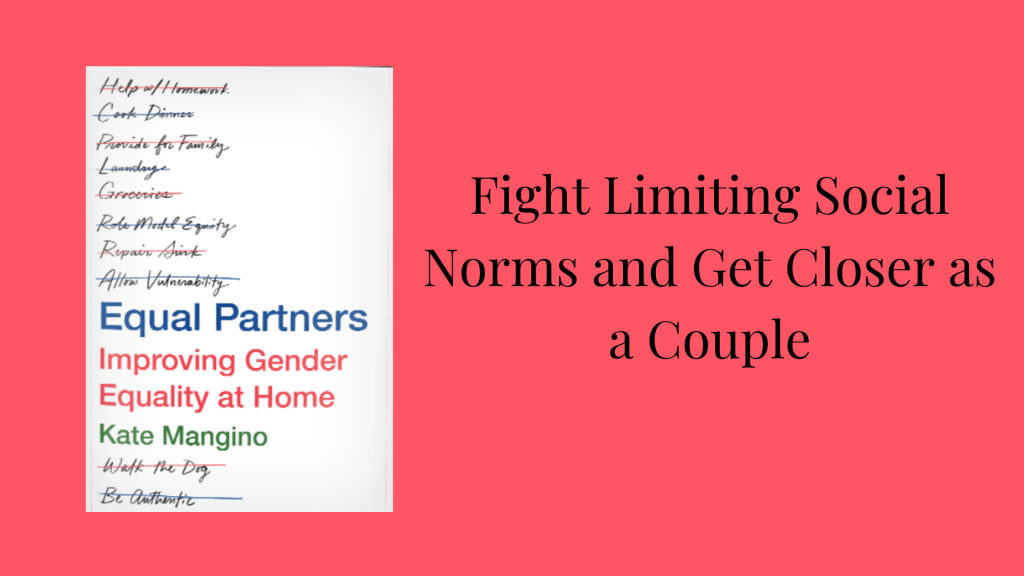
Kate, who studies the impact of gender roles on society, applied this lens to the household experience for her new book, Equal Partners. And most importantly, how we can opt into language and practices, in our relationships that accelerate cultural change.
What if there are no longer ?female? or ?male? things to-do, when Moms partner with Dads? And they decide, as adults raising a family, how to divide the work? It?s possible you get there, inside of your own couple bubble. But once you engage with the outside world, everything from finding a changing table to school forms, will remind you that expectations are still gendered. So, what?s an enlightened couple to do?
Most People Want Equal Partnerships
Kate said, ?Gender equality is hugely popular. Most Americans say it’s a value they want to have. And so, if we read about it, talk about it and help each other self-correct in gentle friendly ways, I like to think that we will see a shift"
Gender equality encompasses a broad range of rights. Like equal pay, leadership representation, safety, health and reproductive outcomes. Yet what happens at home, influences these bigger systems. And vice versa. So, we repeatedly hear an outcry from Mothers, partnered with Dads. That owning the childcare and housework is among their greatest sources of stress.
But Couples Can Choose Their Own Adventure
Couples get to decide what works in their homes. Kate acknowledges, some people opt into traditional marriages. ?If she is happy to take care of the domestic space and he’s happy to be the breadwinner, there isn?t a wrong way to live. If both parties have come to that decision and are happy living that way. I talk about equal partnership because the most common household structure right now is a double income earning family. Because both of us have to work, in most couples, to keep the household going"
But We?re Not Really There Yet
Dual income couples in the US aren?t new. Kate explained, ?We know there were plenty of dual working families in the 1940s, 50s and 60s because they had to. Especially working in agriculture. But our culture idealized this ?stay at home Mom? and ?working Dad? that gave us this framework, we were all supposed to work towards. And our structures grew up around this ideal. So, in the US we’ve had this false expectation for a long time that wasn’t meshing with our reality"
And it Limits How Many Parents Show up
?I’m on endless community and school-based chat groups, text groups and e-mail list serves, that stem from that ideal,? Kate said. We discussed how our social circles tend to mirror our lived experiences. And commonalities. Which perpetuates the gendered norms unless we resist. She added, ?I have so many networks of women. That if I have a question, about whether or not Friday is an early release day or which hills are best for sledding, I can get that answer in about 45 seconds. Men can’t and that’s a structural issue" It hurts women in the workplace and men in the home. How do we override these challenges?
Plus, Masculinity Needs a Reboot
Kate sought a group of socioeconomically and geographically diverse men, for her book, who are equal partners. ?I found 40 men throughout the United States and Canada, who do half of the physical and cognitive tasks in their homes. I spoke with each one of them about their backgrounds, motivations and then, what strategies they use in their relationships to make it work" Initially, she wondered how these men felt about the loss of what Raewyn Connell calls the ?patriarchal dividend" Which translates into more time choice, men can use for leisure, wellness or career growth. But their responses surprised her.
The Men Who Have it, Value Tighter Family Bonds
Kate said, ?When it comes to motivation there was one universal truth that pleasantly surprised me. When I started this research I asked, are you resentful that you’ve given up a more leisurely life? Basically, what made you say, no I don’t need to lay on my couch in my slippers every night and watch TV? Or go hang out with my guy friends all day Saturday? But everyone corrected me"
Their responses prompted her to adjust her research protocol. ?They said, ?I’m not giving up anything. I gain so much by living this way. I’m selfish because I want a really close relationship with my spouse (or partner.) And I love having a really close relationship with my kids. I love the hugs, cuddles, stories and I love being loved. And I get all of that because I am an equal partner." Beautiful. But it?s not the norm. So, some of these men contend with external resistance.
And Modeling Their Values
Kate explained, ?Some of them live in progressive bubbles and don’t feel like they have to do a lot of push back. Because their community is supportive. But I also had a lot of people who live in traditional neighborhoods and have to push back frequently. And they’ve learned the words to use, with their friends and family, based on their comfort level. One person told me that role modeling is really important for him and his partner. And every time they visit his family, it’s sort of expected that the women cook all day. Women then serve the men, who sit around and watch football all night. And he said, ?I’m the one guy who does dishes in the kitchen. I don’t even have to say anything. But just that act, of helping my female relatives for 45 minutes in the kitchen, makes a statement" And then they make sure to debrief with their son, on the way home"
So, be Intentional With Your Kids Too
Kate explained how they separate the differences in their behavior and values, from the familial love and support they feel. ?They tell their son, ?family is family, and we love visiting them. There are many memories we share and things we love about this group of people. But there are some values we don’t share" Then, they do a little post-family-visit discussion.
She added, ?They ask their child questions like, ?what did you notice was different with your cousins from what we do in our household? Did anything make you uncomfortable. Or do you have any questions" He said the sheer intentionality of having that conversation, every time, is really powerful to change the next generation. And being that example for his cousins, nieces and nephews, means maybe they’ll think about this in the future, when they partner up" Bravo!
And Choose Your Words Carefully
In the book, she includes an introspective chapter about the importance of language. And how we can use it to advance change. Kate provides prompts for readers to think about. ?What things am I going to say or not say? What language am I comfortable with, that supports my own values? And then, how am I going to use that language when I talk to my friends, colleagues and family" If those differences are strong, she encourages us to examine where we feel confident challenging other?s beliefs. ?How far am I willing to go? Am I willing to say, ?I don’t agree with that? or offer another example? Or am I just going to keep quiet" So good!
To Create Meaningful Change
Kate said, ?I don’t think there’s a right or wrong. It depends on the individuals, the power structures between them and who they’re talking to. And if they’re afraid of any sort of negative repercussions. But at least it gives you options. And helps people think through the intentionality of their words. What they’re going to say and why. That’s a huge part of social change!?
Even on the days when you may feel powerless, it?s a reminder you have power. Especially among your family, friends, with your children and in your communities. Kate?s new book encourages everyone to embrace a persistent yet resonant form of social activism. That has the potential to unwind the gendered rules that leave many couples feeling frustrated. And stalled when trying to fulfill the family or professional lives they imagined.
—-
Many thanks to the talented Dr. Kate Mangino!
Check out her amazing new book Equal Partners.?And follow Kate?s great adventure on her website?and Twitter.
?Enjoy the gift of more time. Self-care packages + wellness support for Moms.
? Ready to put yourself back onto your to-do list? Take a TimeCheck.
""?Shared your story yet? Take our quick survey to change how workplaces support parents.
"Employers, ready to rewrite hidden workplace rules? Become Allies@Work?
Kate?Mangino, PhD?is a gender expert and professional facilitator who works with international non-profit organizations to promote positive social change. She has written and delivered curricula in over 20 countries about issues such as: gender equality, women?s empowerment, healthy masculinity, HIV prevention, and early and forced childhood marriage. She brings her lens of gender and social change to her debut book,?Equal Partners, which addresses household gender inequality in the United States and?offers practical advice as to what each of us can do to rewrite gender norms.