“How someone navigates being adrift, depends on what happened during the mooring process in their life. …Individuals who are unable to do the critical work to see that they are adrift can set other people adrift. And when people who are policy makers or managers are unmoored, it causes real damage…” Dr. Jacqueline Mattis, PhD. Dean, School of Arts & Sciences, Rutgers University
It’s probably not surprising to anyone that the global mental health crisis for children and adults continues to escalate. But why do most adults, regardless of how successful or stable their lives appear, feel so unmoored? This question was at the heart of a lively discussion during the American Psychological Association’s annual conference this week.
Caregiver burnout is real. And parent stress was already declared a national emergency by former Surgeon General, Dr. Vivek Murty. Moms, in particular are at greater risk for anxiety, depression and stress related illnesses. And the conditions we live, work, and parent in, continue to demand more energy, vigilance and time.
Families feel the weight from lack of logistical and financial support. So, facing off against constrained systems to receive childcare, eldercare, education or healthcare, pushes many to their emotional limits. Most of us, have options in our daily choices that can ease the strain. Each day we can begin to explore how to increase support while engaging in work and relationships we value.
Enjoy wisdom from this wonderful panel. “Adulthood Unmoored: Psychology for the Overwhelmed” moderated by Angela Haupt, Editor, Health & Wellness for TIME.
Recognize and Resist Perfectionism
“…Perfectionism doesn’t actually lead to higher performance. It’s a flee from fear or shame therefore perfectionists will push themselves towards things they can control. And where they can avoid failure so, perfectionists burn out more and self-handicap more…” Dr. Thomas Curran, PhD, Associate Professor of Psychology, London School of Economics and Political Science
Communicate with Curiosity and Clarity
“…Most of us are not taught to communicate clearly… and there are no magical mind readers among us but the ability to communicate well can be taught. …We need to make it okay to ask, ‘what did you mean by that?’ And talk about what we want to accomplish, instead of relying on what’s implied or subtle in the workplace. Because not everyone knows what that is…” Dr. Tessa West, PhD, Professor of Psychology, New York University
Claim Your Growth
“Some people refer to what they’re feeling as a midlife crisis because we’re socialized to think about having one but for many this is not a crisis moment. It’s a growth moment, where they are becoming more themselves. Recognizing that something is not right in our lives and changing it, is not a crisis, it’s growth…” Dr. Clare Mehta, PhD, Professor of Psychology, Emmanuel College, Boston; Academic Visitor, Royal Holloway University of London
Take Time to Resolve Misunderstandings
“…People can interpret very small things as disrespect. And because we’re not clearing up the little things, they turn into big things…” Dr. Tessa West, PhD, Professor of Psychology, New York University
Help People Feel Seen
“Before I go into a meeting I’m thinking, ‘why am I going and what do I want to get out of it?’ And how I can affirm and respect the humanity of others? Even when there’s disagreement… because there’s a desire to have your existence validated. People want to step into spaces and feel like they belong.” Dr. Alvin Thomas, PhD, Associate Professor of Human Development and Family Studies, University of Wisconsin–Madison
Ruthlessly Prioritize What Matters
“There’s rising perfectionism and perfectionistic concerns. (In part) because the larger the gaps are between the rich and poor, the consequence of falling behind get amplified… (We can’t perfect everything so,) ring fence time for really deep work and accept certain things as good enough so, you can shut off the lap top. And make time for friends and family.” Dr. Thomas Curran, PhD, Associate Professor of Psychology, London School of Economics and Political Science
It’s Normal to Feel the Crunch of Care and Career
“We know that each of you is different then you were last year and we need to pay more attention to adult development. When we reach the career and care crunch we’re often trying to grow in our careers. …Especially in the US we’re expected to work a lot of hours and if you also have children at home caring for them takes a lot of time and energy…” Dr. Clare Mehta, PhD, Professor of Psychology, Emmanuel College, Boston; Academic Visitor, Royal Holloway University of London
Find Your Community
“… To have the opportunity to create joy in your life you have to be in an ecosystem that allows for that or be in the position to change the ecosystem…” Dr. Jacqueline Mattis, PhD. Dean, School of Arts & Sciences, Rutgers University
Embrace Human Connection
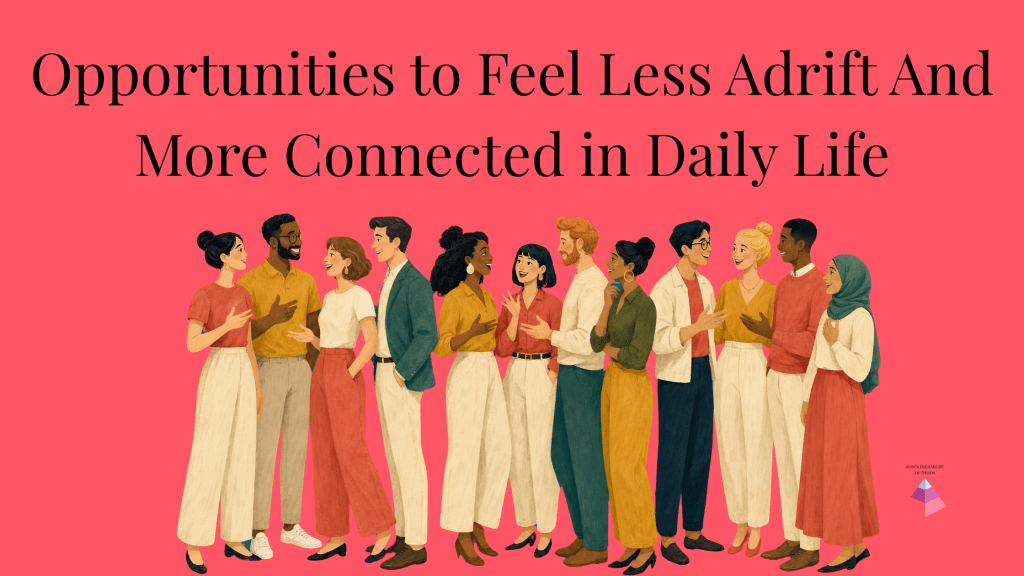
Each of the panelists expressed that what we’re experiencing collectively is a natural reaction to difficult stimuli, including having to manage stressors that are unique to our generation. During the panel, several discussed how the ‘antidote’ to feeling overwhelmed and untethered, is to feel grounded. That’s often through community and relationships.
Yes, it can be virtual but it’s ideal when we look for opportunities to connect with people in our lives. As Dr. Tessa West, PhD, Professor of Psychology, New York University said, “We really need more in person interactions, and one to one conversation.”
Many thanks to the wonderful panelists and the American Psychological Association for hosting such thoughtful discussions and workshops about mental health and how it intersects with every aspect of how we work and move through society.
——-
📚 Buy the new book, Repair with Self-Care: Your Guide to the Mom’s Hierarchy of Needs.
 Enjoy the gift of more time for wellbeing and growth. Plus delightful self-care packages for Moms, delivered to your door.
 Ready to put yourself back onto your to-do list? Take a TimeCheck.
 Shared your story yet? Take our quick survey to change how workplaces support parents.
 Employers, become Allies@Work
About the Panelists: