“It’s not about ‘bouncing back’ I really dislike that term because your body has changed. And it’s about recovery and feeling fully functional, it’s also about not ignoring how you feel. Like a little bit of leaking, hip pain or the impact of breastfeeding after a year or two on your shoulder blades, time, and your mental health. There’s no one-size-fits-all, ‘toolbox to get through this’ but we can understand our bodies and take steps. Not everyone can run at 13 weeks postpartum but maybe you can do a few planks, or a few mini-squats or 10 minutes of meditation,” said Dr. Sam DuFlo. Author, Doctor of Physical Therapy and Pelvic Rehabilitation Expert.
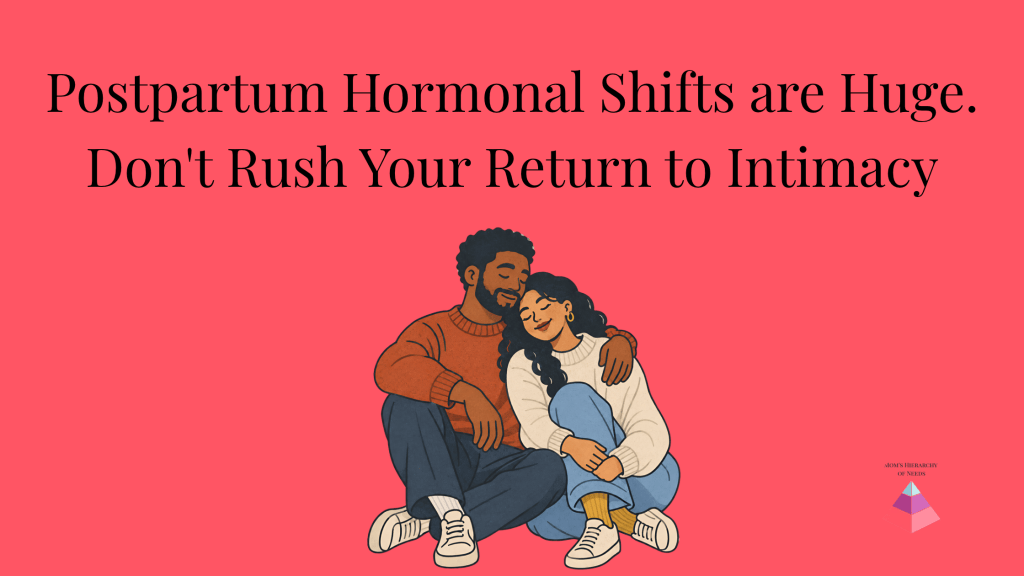
Through our wildest hormonal leaps, many feel rushed to “return to normal.” But whether it’s in your career, exercise, or physical intimacy with your partner, forcing a speedy return can lead to stress and regret. There are steps you can take to set your pace and heal with more support.
Transformation Requires Time and Support
Mothers don’t get a lot of love through hormonal changes. The “motherhood penalty” is rampant and employers tend to hold us to pre-kids performance. Research and workplace protections through menopause and other reproductive conditions, are just emerging.
We also expect a lot from ourselves, we take pride in being multi-tasking magicians. Restoring your mental, physical and emotional wellbeing through hormonal shifts takes time. Yet it often runs in the background of intense daily demands for your energy.
Maternal Health, However Remains in Crisis
Sam said, “when you’re pregnant it’s the biggest physiological change that can naturally occur. It changes how all of your hormones interact with each other, and over 25% of women in this country, return to work within 10 days of giving birth. But if you have an ACL tear, you’re given PT three times a week for months and all this added support.”
Although most of us are fortunate to get through it, not everyone does. And typically it’s with tradeoffs that take years to unwind. We know this rush to return-to-things doesn’t serve mothers, we experience higher rates of anxiety; depression and the US has the highest maternal mortality rate of resourced nations. The maternal health crisis in disturbing at every level, losses disproportionately impact Black women, occur up to one-year postpartum and suicide and substance use are among the top causes. There are many structural reasons for this. Including lack of protected paid leave, which forces many to resume paid work before they’re ready.
You Can Build Your Own Support Infrastructure
Augment your self-care with proactive health care support and specialists at each stage of your journey. Sam said, “We’re given so much preparation about how to pick out a stroller and to give birth then postpartum, all of the support just shuts off. Everything becomes focused on the baby.” A lot of women may not think about physical therapy, unless they have an injury or difficult birth. But expertise for the physical recovery can be transformative.
As Sam shared in parts one and two from our interview, women can benefit from physical therapy at each life stage. Especially to regain strength or heal from hidden injuries. “We look at everything. Including the pelvic floor, overall strength, and how we support our bodies through transformations like pregnancy, perinatal and perimenopause stages. This work knocks on the door of those topics that were taboo in the past.”
Your Readiness for Sex May Change
Your emotional and physical comfort with everything, including sex can change. Especially postpartum and we don’t really talk about how hormones influence our needs as a community. Sam said, “We’ve somehow made a ‘six-week sex rule’ if you’re cleared by your OB/GYN postpartum and I remember that visit. It’s basically a checkup to determine if your wounds are healed enough to resume normal activity. It’s not an open door to say, ‘yes you should go home today and have sex’. Some people really seek that intimacy, and some people need a lot of other help, in other ways and that’s okay. It all needs to be destigmatized.”
Don’t Ignore Pain or Discomfort
Sam said, “If you have a tear or pain, it’s really hard to be intimate. The prolactin in our bodies while breastfeeding can suppress estrogen and cause thinning of your vaginal tissue. If it feels dry or irritated, it can usually be addressed easily with a visit to your OB/GYN for a prescription cream.” She went onto explain, lots of different things can cause pain and it’s important to figure out why.
She added, “One of my clients has a zillion hemorrhoids and wants nothing to do with it having penetrative intercourse right now. But her partner may feel a little helpless because they’re not lactating or experiencing physical changes. Leslie I say to women, ‘hey here’s a picture of where your tear is, why you’re feeling pain and what your timeline looks like.’ Pain affects the rest of your system too and you can’t get as well lubricated. Or, here are some positions you can try, there’s a lot we can talk about with folks.”
Learn Why it’s Happening and Ease Back Into Routines
Sex is tricky, there are many factors that influence how you feel about it, including how smooth your relationship feels. Sam explained, “You may not be ready for penetrative intercourse or an orgasm or any of those things. Have you explored self-pleasure? Have you looked at your vaginal area in a mirror since you gave birth, to see what’s different? Does an orgasm feel good or does it feel like something you want do with your partner? It does not necessarily have to be together, it can be next to each other.”
Your Partnership Also Changes After Kids
Having kids is among the most fulfilling and meaningful commitments we take on. We love our families yet still experience new strain on our bodies, emotional reserves and marriages. You or your partner can have new expectations, not to mention difficulty with fatigue, time alone or communication. Sam said, “The non-birthing partner is kind of unrecognized in the postpartum world. And as you know there are more studies now about how they’re affected. Just because they don’t have the hormonal changes it’s important to understand what it means for them. How are they longing for the connection they’ve missed? Mental health support is equally as important yet many feel shame seeking it. But it should be routine for people to receive mental health care, and pelvic floor physical therapy.”
All Hormonal Shifts Can Influence Intimacy
Sam said, “At any stage of life some people want to have sex whereas others don’t want anything to do with it. This is true for postpartum, perimenopause, post-menopause and during your period. It’s so different for different people. Start taking action to heal your body so, you feel your best and are more likely to want to be intimate with your partner.”
Mental Health Support Can Help
Consider mental health as part of your care team. Sam explained, “This is why we refer so much to mental health practitioners because people are overwhelmed. If your internal brain is running from bears, you don’t want anyone to touch you. If there’s more pressure being thrown on you, now you’re running from many bears. So, have grace and open communication with your partner about that.”
That May Include Couples Therapy
We discussed that it’s not only the physical changes, but intimacy also includes feeling supported with your new roles. Sam said, “there’s so much that plays into this. Including shared responsibilities around the house when you’re spending all your time there.”
We laughed and discussed that the “bears” might include the dishes and the laundry and wow if no one’s helping with that, it feels like more pressure. Sam said, “yes, we need safety especially when you’re in a primal state. When you’re pregnant and postpartum you are protecting this other human. And you viscerally want to feel protected yourself.”
Many thanks to the talented Dr. Sam DuFlo, PT, DPT, PRPC, RRCA!
Learn more about the clinical services at her amazing physiotherapy practice and follow her great adventure on Linked In.
——-
📚 Buy the book, Repair with Self-Care: Your Guide to the Mom’s Hierarchy of Needs.
 Enjoy the gift of more time for you. Self-care support+Moms Rescue Kit.
 Ready to put yourself back onto your to-do list? Take a TimeCheck.
 Shared your story yet? Take our quick survey to change how workplaces support parents.
 Employers, ready to build sustainable capacity? Become Allies@Work
About Dr. Sam DuFlo:
Dr. Sam DuFlo PT, DPT, PRPC, RRCA is an award-winning Doctor of Physical Therapy, author, pelvic rehabilitation practitioner, certified running coach and gait analyst. She is a trustworthy women’s health advisor, brand representative and strategic entrepreneur with a proven track record of scaling a market-leading women’s health medical practice. Bringing a unique perspective as a founder who has successfully built and sold a healthcare business, then founded a second healthcare business, Two Rabbits Physiotherapy.
Dr. Sam is the founder of Indigo Physiotherapy, which empowered people to reclaim their pelvic health throughout all life stages as the mid-Atlantic region’s largest pelvic health care practice of its kind. She’s the author of Pelvic Prep School, a highly curated course and book containing essential pelvic health information, published by Morgan James Publishing.
Dr. Sam has appeared in Runners World, Women’s Running Magazine, PopSugar, Life and Style Magazine, Livestrong, Scary Mommy, Motherhood Magazine, among others, as well as featured in podcasts such as The Right Room with Hilary Phelps, The Radical Woman, and Working Mom Hour. She has spoken nationally as a trustworthy expert in women’s health, inclusive of the World Trade Center Institute, Athena Keynote, and the 2024 Track and Field Olympic Trials, as well as been a feature in tv newscasts and media.
Named Life and Style’s “Women Leaders Who Are Reshaping our World in Astonishing Ways.” Dr. Sam is nationally known for her expertise in treating pelvic pain, incontinence, prolapse, diastasis recti and other pelvic and physical therapy concerns of all genders throughout the lifespan, in particular peripartum as well as people returning to sport and running postpartum.
Dr. Sam is adjunct faculty at several universities, a Board member, a member of the APTA, an RRCA Certified Running Coach, has achieved the highest level of pelvic health board equivalent certification available, a Mom, a marathon runner, and a strong champion of rights and research in the expanding market of women’s health.